|
Technical Description
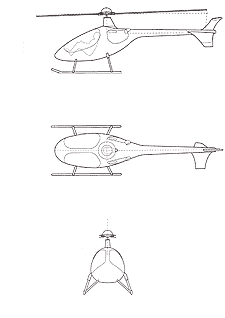
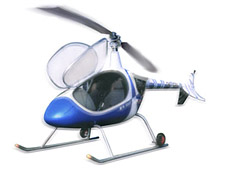
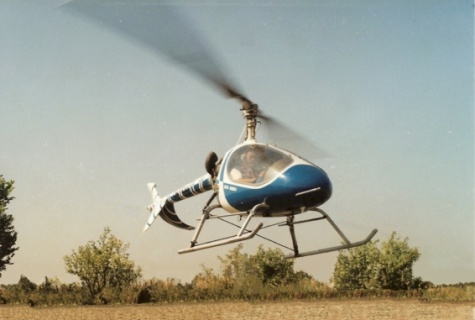
The NA 40 Bongo is a two-seater
fully-composite very light helicopter powered by two turbo-shaft
engines. Its tail rotor has been substituted by a proprietary
patented system for complete compensation of momentum (COCOMO).
Fuselage is manufactured
from polyamide, nomex, aluminium, glass, carbon fibres and
other composite materials. The cockpit, power units and fuel
tank are based on a primary composite double curvature monocoque
sandwich structure, which is manufactured using high-temperature
vacume production technology just like for other primary and
secondary composite parts.
The luggage compartment
has a volume of 230 litres and is based between the engine
compartment and fuel tank, thereby providing a buffer zone
in case of engine failure or fire.
Cockpit configuration is
equipped with analogue avionics for VFR flights and has dual
flight control systems. IFR and "glass cockpit"
versions will be developed at a later stage.
The power unit consists
of two turbo-shaft engines (twin pack concept). A digital/analogue
FADEC computer continuously monitors and controls the unit.
A rubber-textile fuel tank
holding 210 litres is based in the lower part of the fuselage.
Three fully-composite rotorblades
are fitted in three axes with elastomeric suspensions and
have a "safe when damaged"-design.
Bongo's elastomeric rotorhead
is designed for maintenance-free service and its conception
is similar to the Starflex system.
A unique rocket-powered parachute system
can be mounted above the rotor.
Bongo's tail section is equally
fully-composite including the stabilisation and compensation
elements.
The Bongo is equipped with a fixed-skids landing
gear.
There are more than 104 improvements
compare to Technology
Demonstrator, the most important are:
- New three-bladed rotor
- 35% efficiency improvement in COCOMO system
- Enlarged luggage compartment and internal fuel tank
- Enlarged cockpit with improved ergonomics
- Lower empty weight by new composite material mix
|